
Productivity Starts Where Thought Becomes Text
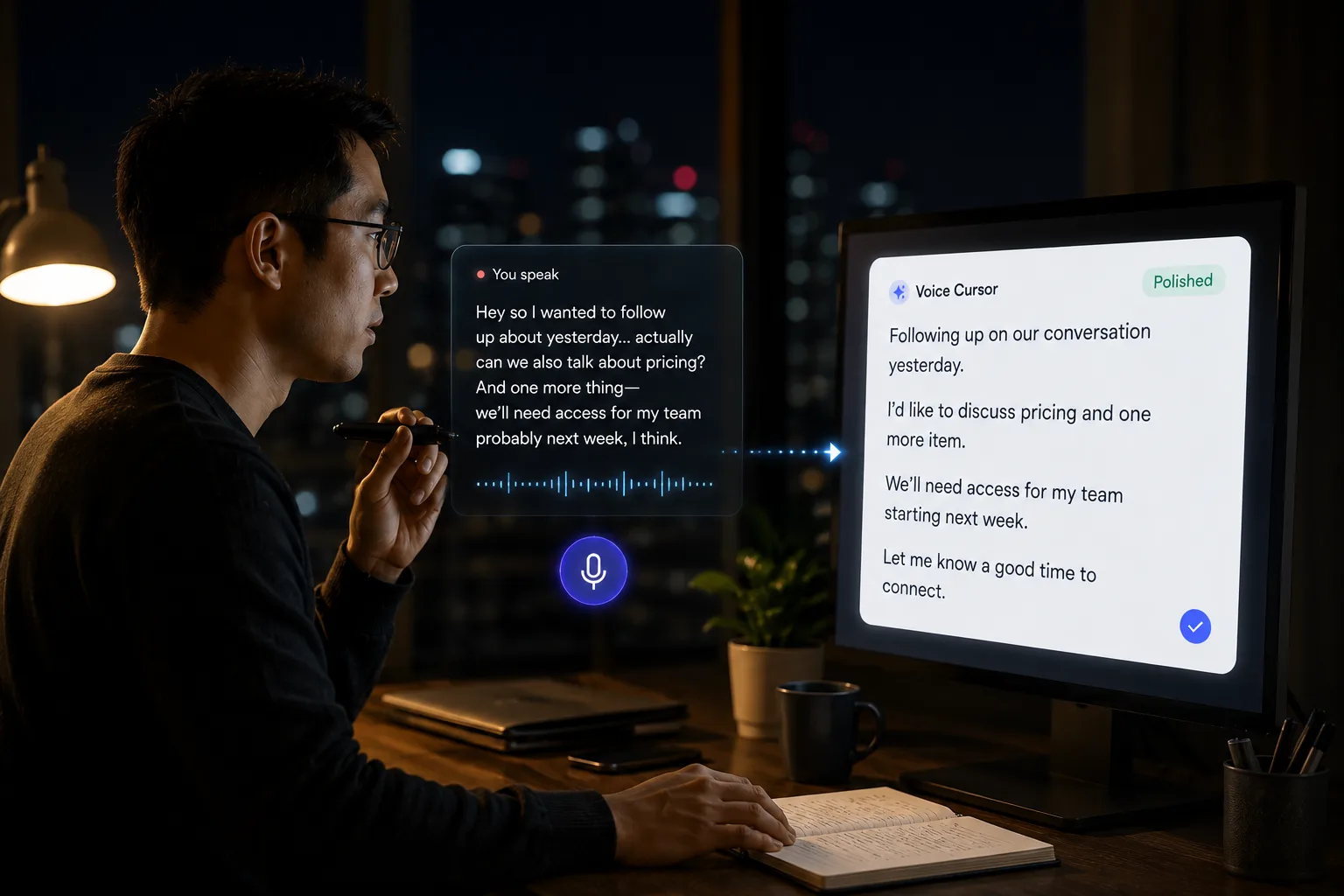
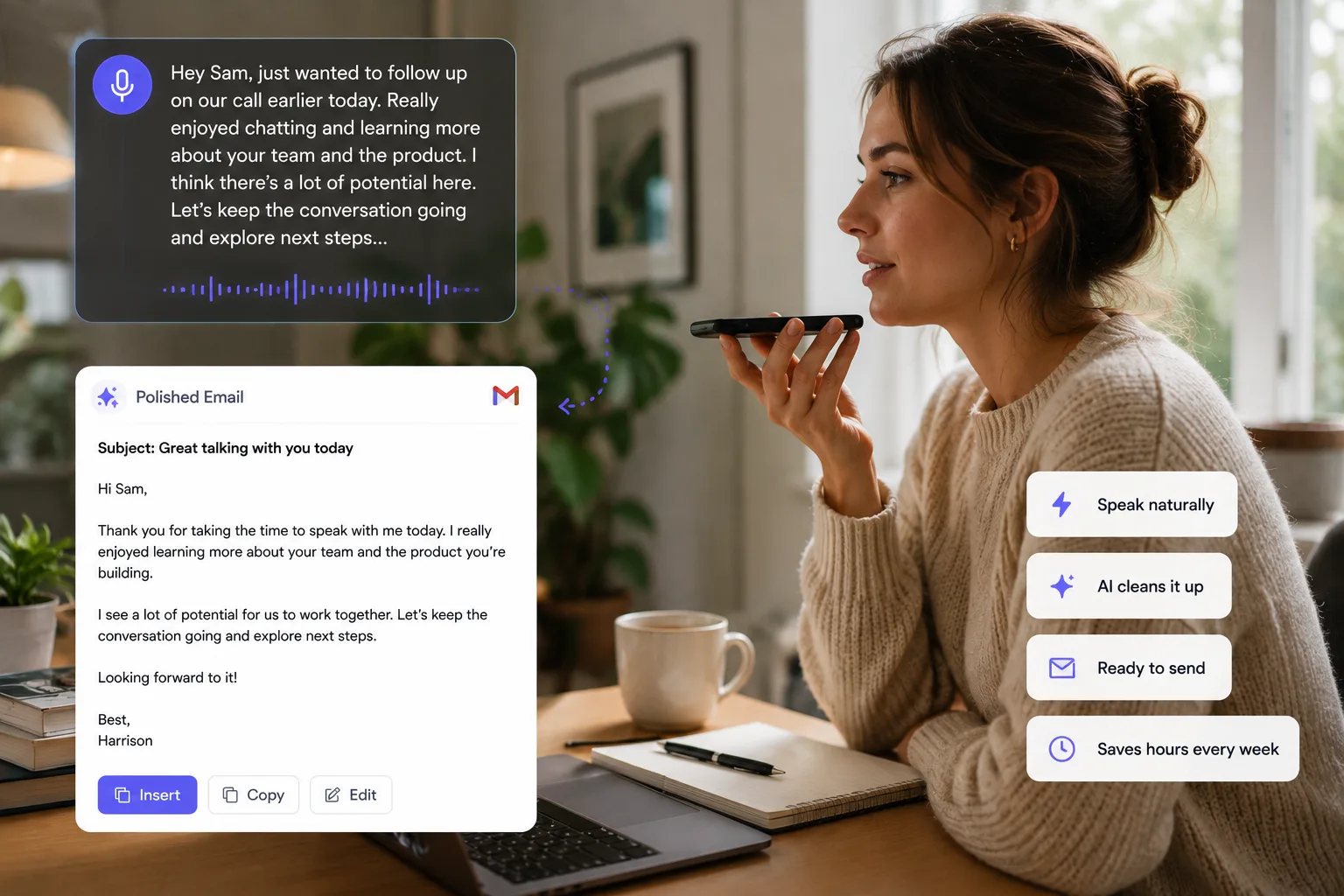
Before work can be organized, it has to be expressed. Voice-first productivity improves the moment where thought becomes usable text.


Voice Cursor Team
March 6, 2026 2 min read
Most productivity tools organize work after it already exists.
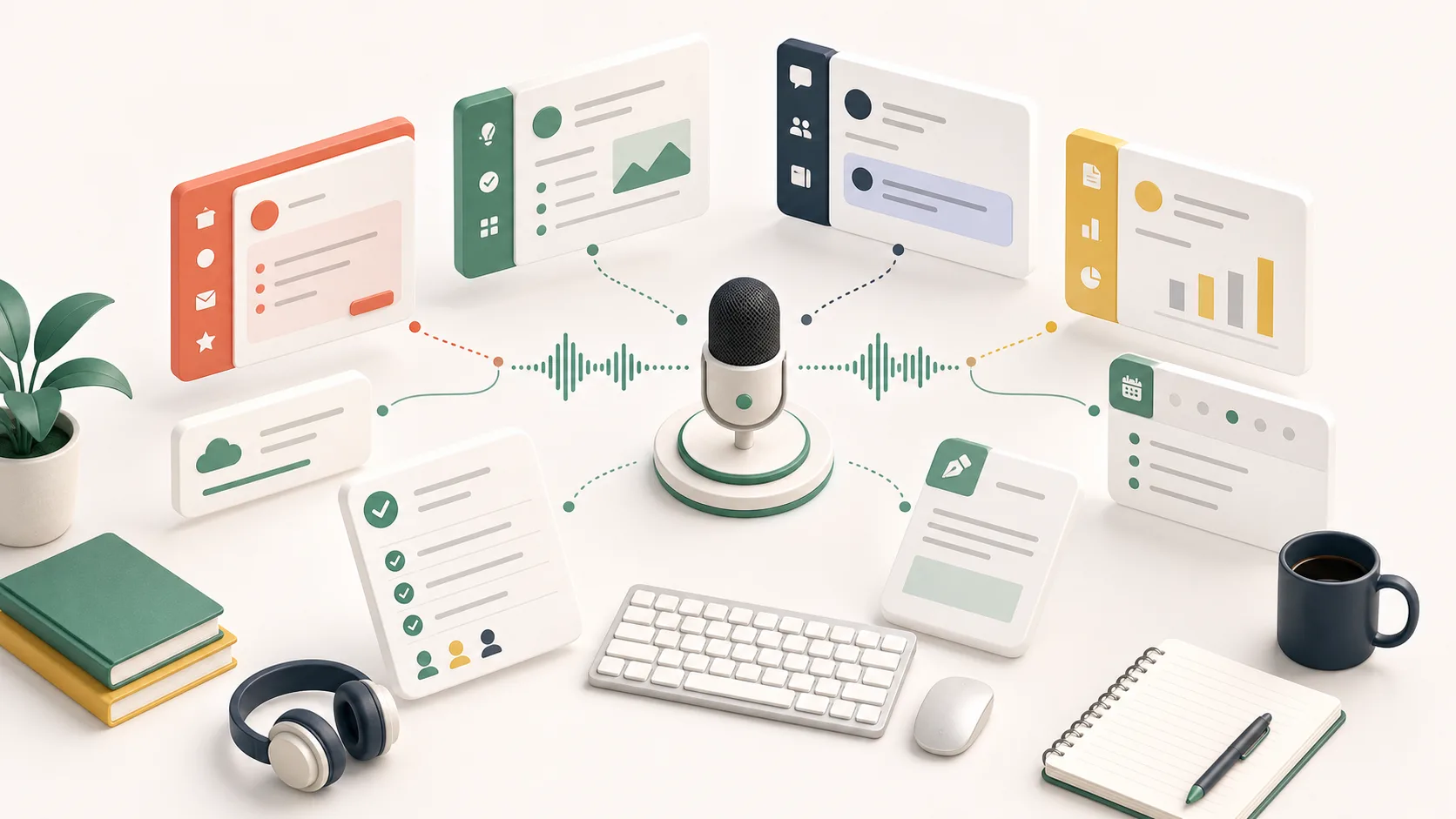
They help manage tasks, notes, calendars, documents, projects, and messages. That is useful. But it misses a deeper bottleneck.
Before work can be organized, it has to be expressed.
An idea has to become a note. A decision has to become a message. A customer insight has to become a summary. A product change has to become a ticket. A thought has to become language.
That conversion is where people lose time.
The overlooked input layer
What if the fastest way to create work is to speak it?
Voice Cursor is built around that idea. It helps people turn spoken thoughts into polished text they can use across daily workflows.
This is not about replacing every productivity app. It is about improving the input layer.
Work often starts as one sentence
"Here is what we should do." "Here is what the customer said." "Here is the bug." "Here is the follow-up." "Here is the prompt." "Here is the idea."
The keyboard forces all of that language through manual typing. Voice opens a faster path.
Voice-first productivity is useful when the thought is already clear enough to explain. You do not need a full document yet. You need a first version. A note. A draft. A message. A prompt. A summary.
Voice Cursor helps create that first version.
For example, after a meeting, you can dictate:
"The main decision was to delay the dashboard redesign and focus on activation. The action item is to identify where users fail before their first successful dictation. Design will mock up a shorter onboarding path by Friday."
That is instantly more useful than relying on memory.
Voice-first productivity also works well with AI. As more tools become prompt-driven, the bottleneck becomes your ability to give clear instructions. Voice lets you give richer instructions faster.
Better prompts are usually spoken first
Instead of typing "Make this better," you can say: "Rewrite this update so it sounds confident and concise. Keep the part about the launch delay, but make the reason clearer. The audience is investors, so avoid sounding defensive."
That kind of context produces better results.
The future of productivity will not be another dashboard alone.
It will be a better relationship between intention and software.
Voice is powerful because it sits close to intention. It lets people express what they mean before they get trapped in formatting, menus, or blank-page anxiety.
The best productivity systems reduce friction at the point where work begins.
Voice Cursor focuses on that point.
Speak the thought.
Get the draft.
Keep moving.
FAQ
What is voice-first productivity?
Voice-first productivity means using speech as a primary input method for drafting, prompting, messaging, note-taking, and capturing ideas.
Is voice-first productivity only for hands-free work?
No. It is also useful for speed, clarity, and reducing typing friction.
How does Voice Cursor support voice-first productivity?
Voice Cursor turns spoken thoughts into polished text for everyday work.
Try Voice Cursor
Turn spoken thoughts into polished writing.
Download Voice Cursor and use AI voice dictation across the apps where your work already happens.
Download the app